Oppenheimer's Greatest Creation...and Fear
By Thuviksa

Anyhow, we're not here to talk about movie releases and, although Barbie turned out to be a blockbuster, we aren't here to talk about that either. Instead, we're honing in on the subject of Nolan's biographical motion picture: J. Robert Oppenheimer.
The Century's Theoretical Physicist
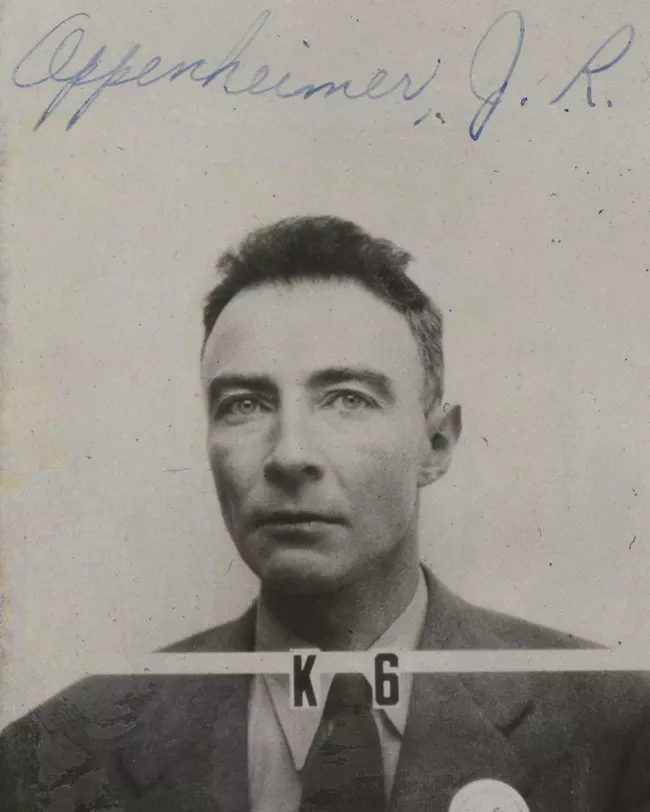
Meanwhile, as Oppenheimer continued to show the world his ingenuity, Adolf Hitler came to power across the Atlantic in Germany. Soon enough, the world had been thrust into the deadliest war to come to planet Earth, the Second Great War---or World War II. America rushed to be the first to create a nuclear bomb, wary of both the Russian and Nazi efforts to do so as well.
August of 1942, the U.S. Army was given the authority to organize British and American physicists in what became known as the Manhattan Project. Oppenheimer was given the responsibilities of creating and administering a laboratory for the assignment. The laboratory he created still stands today, named the Los Alamos National Laboratory, it stands in Los Alamos, New Mexico.
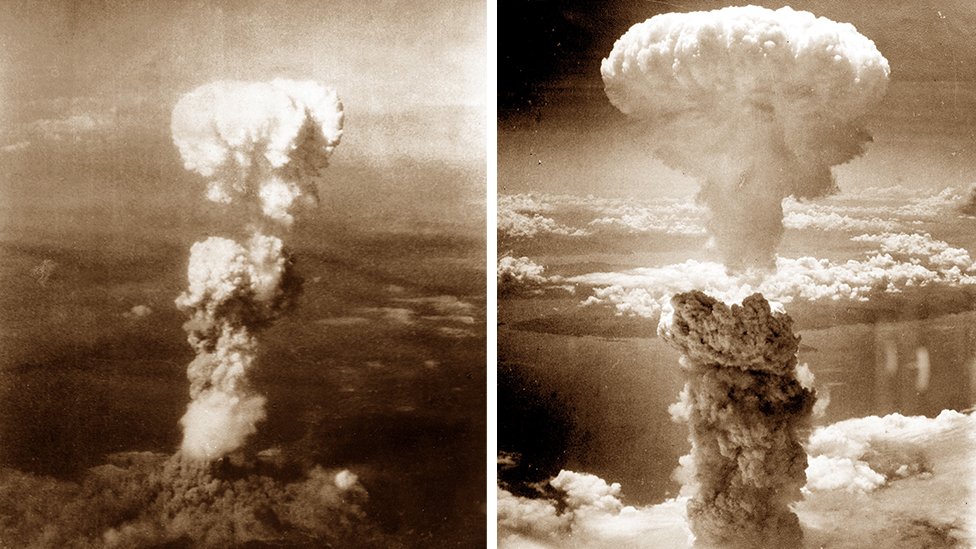
Following the successful testing of a nuclear bomb at the Trinity Site, a trio of national laboratories, including Los Alamos, Oak Ridge, and the Hanford Site in Washington State, sped to create the two bombs---Little Boy (uranium gun-type) and Fat Man (plutonium implosion)---that would be dropped on the only Axis Power that had not surrendered yet, Japan. Although these laboratories were not the only ones that pitched in to this war effort, they were the main players, with Oak Ridge procuring the enriched uranium, the Hanford Site building industrial-sized nuclear reactors, and Los Alamos working on the weapons design.
Though all of this was great and all for the Allied Powers that eventually ended up winning the war due to the catastrophic dropping of both atomic bombs on the Japanese cities of Hiroshima and Nagasaki, Oppenheimer had resigned from his duty nearly three months after the successful Trinity test.
Why? Why go through all this trouble---even consulting Albert Einstein just to get his approval for the project---just to ditch on it in the end?
Well, for lack of a better way to put it, Oppenheimer had realized the war-ending weapons he'd just handed to the U.S. (and indirectly to the Soviet Union---spy networks, remember?) might as well be world-ending, too.
The Fight For Nuclear Regulations
Oppenheimer went full throttle into efforts of warning the nation about the threats of the bomb, becoming head of the Institute for Advanced Study and serving as chairman of the General Advisory Committee of the Atomic Energy Commission from 1947 till 1952, which opposed the creation of the hydrogen bomb.
He even met with President Harry S. Truman to pitch his idea of international regulation of atomic weapons, but ended up irritating the president, meaning his thoughts fell on deaf ears. Due to his constant pressuring the country in order to find solutions to the dangerous problems that arose with his creation, Oppenheimer soon found himself knee-deep into a court fight with the U.S. The government argued that the scientist had been collaborating with Communists during the time he was working on the Manhattan Project and could have leaked America's crucial secrets. In 1954, a hearing ruled that Oppenheimer was not guilty of treason but he shouldn't have access to confidential military information, and, although the Federation of American Scientists immediately came to his defense, Oppenheimer's security clearance as an advisor to the nation's Atomic Energy Commission was revoked just 32 hours before it expired.
Even so, Oppenheimer spent the rest of his life trying to work out ideas that bridged the gap between science and society---and those that curbed the chances of his theory that his creation, the atomic bomb, would lead to global annihilation.
Today, Tomorrow, and the Future
Nowadays, it's not often that we see people running around trying to figure out how and where to drop America's supply of nuclear bombs, but nuclear power is still there in the background, providing some percentage of our everyday electricity while scientists strive to find ways to make it more efficient and safe to use.
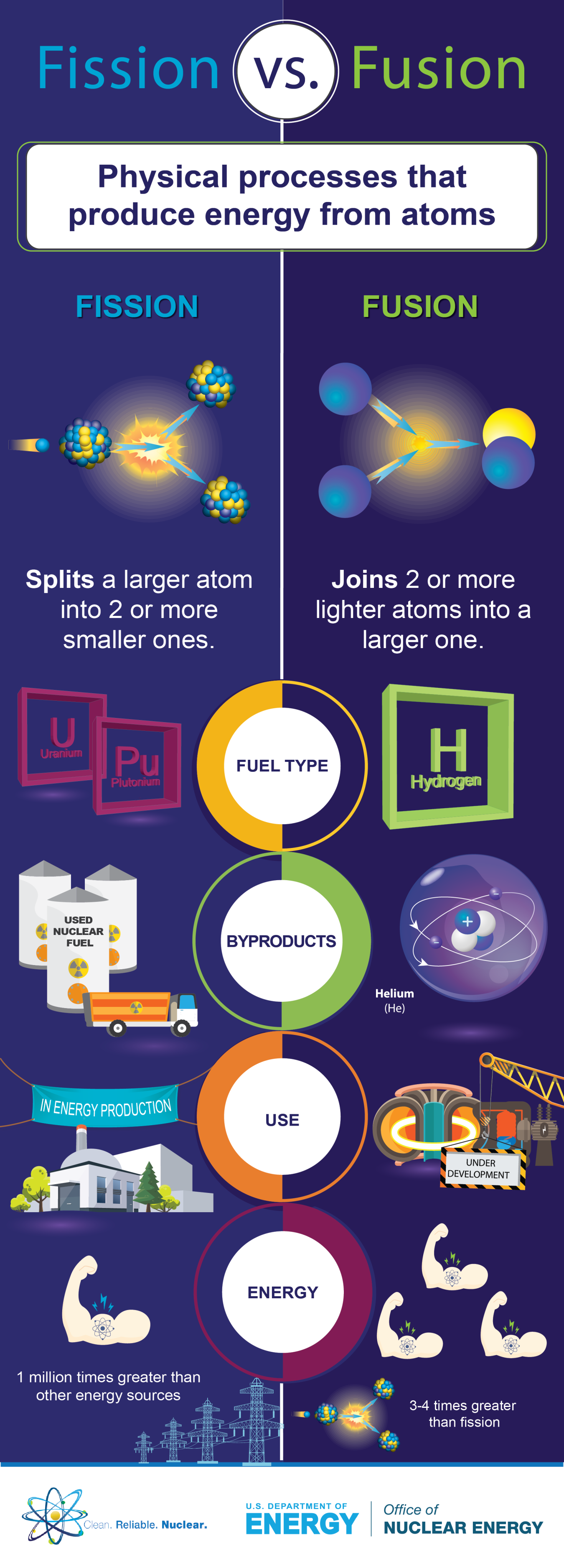
As of now, a majority of nuclear reactors use the process of fission, where a stray neutron is rammed into an atom of enriched uranium, knocking a neutron from the atom free. This free neutron then goes on to bump into another uranium atom and so on, so forth. The power comes from the energy that is released when these neutrons are wrenched free, which heats up water, which then evaporates into water vapor that spin turbines that turn the spinning motion into electricity.
Even looking at this process, we can tell there are many ways in which it could be possibly improved for the better---the daily work of some scientists around the world.
An alternative to nuclear fission and the way in which our very own sun fuels itself, nuclear fusion is thought to be the "better" version. In this process, instead of neutrons getting rammed into uranium, the atomic nuclei of tritium (H^3), helium (He^4), and deuterium (H^2), and a neutron are slammed together at high speeds, causing them to jam together to form a heavier atomic nuclei. The energy released by this collision then heats up the water that evaporates to turn the turbines of the generator inside the nuclear power plant.
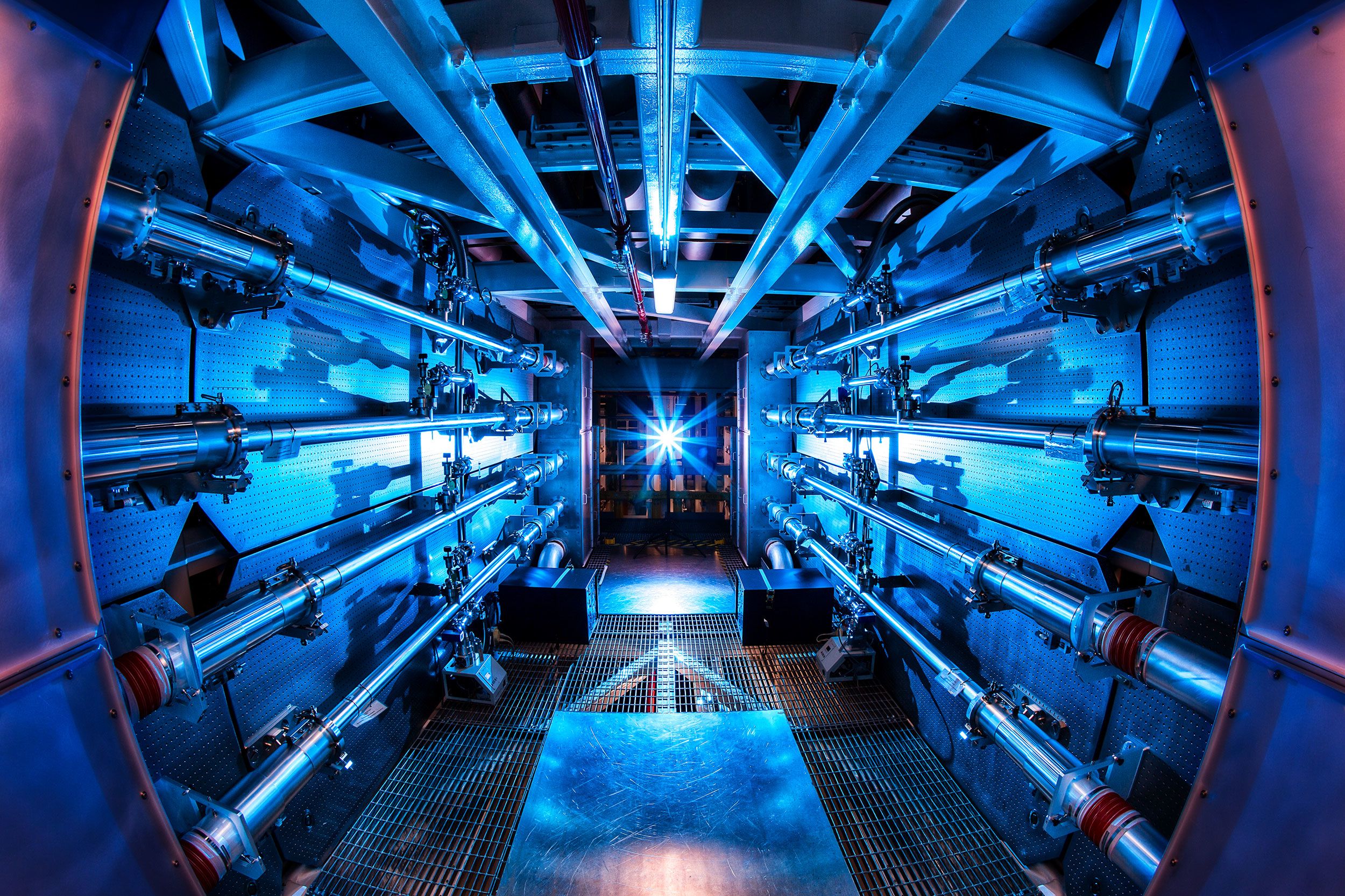
Although the astronomical version of nuclear fusion that stars use differs in the types of atoms it uses, it and the industrial version are the same in the fact that they both ram lighter nuclei together to create a heavier nucleus, the energy release in doing so being the power.
All of this seems harmless, but as Oppenheimer struggled to warn our stubborn nation, nuclear power has a major downside that comes in the form of nuclear waste. This waste, if not disposed of carefully, can emit harmful radiation. Then there's the problem of nuclear power plants exploding, like the Chernobyl disaster. The city in Ukraine that once blossomed with nuclear reactor workers and their families became a ghost town in the blink of an eye.
However, harnessing nuclear energy could be the next big thing, being able to power millions of homes---and its carbon footprint is very low. Along with this, the risks of a nuclear disaster like Chernobyl are relatively low compared to the advantages. Though nuclear disasters are catastrophic like no other when they happen, fossil fuels are a much larger threat to the Earth's environment and to humans alike.
Energy dependency is also a problem we should take into account. Though harnessing nuclear energy as our main power source would reduce our need to import fossil fuels from other countries, uranium would still need to be imported from external sources (although if we succeeded in mass-producing nuclear fusion, we wouldn't need that either).
Being the next generation of the world's great scientists and leaders, it's up to us to decide on the answer: Is nuclear power worth it?


I was thinking this could be a future discussion topic :)
ReplyDelete